


THE PEOPLE, PRODUCTS & TRENDS DRIVING INDUSTRY CHANGE


THE PEOPLE, PRODUCTS
& TRENDS DRIVING
INDUSTRY CHANGE


As the business travel landscape accelerates into 2026, a new group of leaders, innovators and solutions is redefining what it means to travel for work.
The early weeks of 2026 have been dogged by geopolitical and economic uncertainty which is rarely conducive to the kind of stability, long-term planning and predictability that businesses – and business travel programmes in particular – rely on. But against that backdrop, this year’s Hotlist shines a light on the people, products and ideas helping the industry cut through the noise. It highlights a cross-section of people and products who are not just responding to the industry’s seismic shifts but driving them – from AI-powered innovation and rapidly scaling companies to strategic alliances and sustainability initiatives. Based on more than 150 nominations from industry personnel and the BTN Europe editorial team, the 2026 Hotlist recognises the individuals and organisations that are leaders in their field, challenging established norms and establishing best practice. Read on to discover Business Travel News Europe's 2026 Hotlist.
Words: Lauren Arena, Rob Gill & Andy Hoskins






ORGANISATIONS
ORGANISATIONS


PredictX
Fraud detection
At a time when pretty much every travel supplier is touting its AI credentials, data analytics specialist PredictX’s impressive development pipeline of new products is winning plaudits from around the industry. The company’s new AI workspace agent Cogent won the Business Travel Innovation Faceoff at Business Travel Show Europe in London last year, while the company has also teamed up with sustainability specialist Squake to offer a new module to track, report and manage CO2 emissions. Led by CEO Keesup Choe, PredictX says it will be focused on tackling “cost optimisation, sustainability, traveller satisfaction and real-time reporting” in 2026. Among these “more advanced” developments will be products such as the DetectX platform, which promises to use AI to combat fraud within expense management, allowing corporates to “uncover hidden misuse and protect their assets with unmatched precision”.

Complete, by Amex GBT & Concur
Divisive development
The announcement of a “strategic alliance” between American Express Global Business Travel and SAP Concur in October was one of the most eye-catching stories of 2025, and the impact of their new integrated travel and expense platform, called Complete, is sure to be closely monitored in the coming months. The platform is already being used by some joint customers, while other developments will see “expedited releases” of NDC-based airline content. On a wider level, there will be plenty of focus on how the ongoing development of the new Concur Travel booking tool (known as T2) is affected by the Amex GBT-Concur alliance. Concur Travel president Charlie Sultan has insisted the company will continue to invest in T2 but there are worries from non-Amex GBT customers – and rival TMCs – that they might end up with an inferior product.

Talma Travel Solutions
Billion dollar business
Talma Travel Solutions was already on a path of rapid international expansion when CEO Iya Magen upped the ante last May by taking a majority stake in US-based Solutions Travel. The deal followed the establishment of Talma’s UK operations – having acquired Norad Travel Group in 2022 (which recently rebranded to Talma EMEA) and Blue Cube Travel in 2024 – and ahead of expansion in the Asia-Pacific region with its US$10 million acquisition in October of Sydney-based Bay Travel Group. Further expansion is on the cards for 2026, with Magen pointing to "meaningful opportunities in selected European markets where we already serve clients but do not yet operate our own servicing footprint." M&A will continue to play a role in the TMC's growth strategy, alongside plans to build a partner network in markets "where ownership is not the right path." Previously focused on SME programmes, the TMC said its expanded footprint has helped to secure larger mid-market and “selected” enterprise clients. “Rather than moving away from SMEs, we are building a more balanced portfolio,” Magen insisted. In December, the TMC said its global revenues for 2025 were set to exceed US$1 billion.

Thrust Carbon
Behaviour change
Business travel sustainability trailblazer Thrust Carbon has launched a new ‘behaviour-change’ tool to encourage travellers to choose more sustainable and cost-effective options. The EngageAI “agentic” platform uses traveller itineraries and local data to deliver messages via various channels and at key points during trip planning and travel. Following the launch of 'nudge' notifications for travellers last year, this new tool goes one step further by targeting travellers at exactly the right moment. “It knows when the decision is happening and intervenes before the default choice gets made,” said Thrust Carbon founder and CEO Kit Aspen. For example, the tool can use itinerary, flight, safety and immigration queue data to message travellers when they walk through an arrivals gate at an airport to encourage them to use trains to get to their destination when they are a faster and lower-cost option. “As the data source of $100 billion of annual travel spend, we're able to reliably predict who will emit and what is needed to change their behaviour,” Aspen added.

SilverDoor
Great expectations
All eyes are on SilverDoor following its merger with Synergy Global Housing and the much-vaunted expansion of its inventory which includes a partnership with IHG Hotels & Resorts. Both deals will significantly expand the breadth of content on Silverdoor’s platform, while the Synergy merger will establish “the world’s largest, most comprehensive and truly global corporate housing provider”, according to the company. The combined group will operate under two brands: SilverDoor for global agency services and Synergy by SilverDoor for the global corporate housing management business, including the operation of its own branded apartments in the UK, Ireland and the US, with further international expansion planned. The move promises more streamlined systems and unified standards, along with “advances in online booking technology with better rates, choice and efficiency”. This will likely include SilverDoor's newly introduced 'digital worker', Brian, who is powered by Robotic Process Automation and AI. Brian joined SilverDoor’s rates team in May and, according to the company, has helped boost inventory by completing the rate mapping process 10 times quicker than a human.




PEOPLE
PEOPLE

Rosemary Maloney
New leadership
Rosemary Maloney took over as president of the GBTA (Global Business Travel Association) from Mark Cuschieri last summer. She has taken the helm at the GBTA at a crucial time for the industry, with increased consolidation across the sector, fast-advancing technology and plenty of external challenges to navigate in the next couple of years. Maloney has promised to “listen, learn and collaborate” with buyers and suppliers alike, and to make sure governments “hear our industry’s voice”. Her Hotlist nominator is “excited to see how she uses her platform to support her goals – namely, to ensure all voices are heard”. New York-based Maloney, who is senior director of corporate travel at The Freeman Company, has a long history with the GBTA including her recent spell as vice president. Maloney has been praised for helping to establish processes and protocols at the GBTA that have made programmes more inclusive. Sustainability also remains a key priority, with Maloney viewing the association’s work as being “essential to ensure the longevity of our industry and planet”.

Verity Phillips-Davies
Sustainability in focus
As travel manager for BDO UK, Verity Phillips-Davies developed and implemented the firm's Carbon Smart Travel Policy, which promotes travel options with lower emissions via an internal carbon pricing mechanism. By applying a carbon price of £45 per tonne of CO₂e to all air travel – which is automatically added to bookings and charged to each business cost centre – the company reduced its business travel emissions per employee by 20.8 per cent in the first six months of 2025. This progress “is keeping us on track for our 40 per cent reduction target by 2030,” said Phillips-Davies. “The carbon pricing tool has improved decision-making by quantifying the financial and environmental impact of travel choices,” she added. Additional measures include introducing ‘easy-to-use’ carbon calculators, encouraging virtual meetings, requiring leadership approval for international event travel, and deploying Alteryx’s automation platform to proactively manage out-of-policy bookings. Phillips-Davies is collaborating with suppliers across air, hotel and rail to achieve cost reductions that support the company’s Net-Zero objectives. This effort includes working with UK rail providers Avanti West Coast and LNER to encourage the firm’s 8,000 travellers to take the train rather than fly whenever possible.

Andrew Lowe
Risk averse
In a climate of increased geopolitical volatility, BP’s travel risk manager Andrew Lowe has advanced travel risk management for the energy giant by developing frameworks and working with various stakeholders. He is the first to earn the Travel Risk Academy’s Level 4 Qualification in Travel Risk Management, accredited by ATHE and aligned with the ISO 31030 standard. Lowe, who described the achievement as “reinforcing both my credibility and capability in the role” said that a recognised certification has become “especially valuable” as organisations increasingly benchmark their corporate travel risk practices against ISO 31030. According to Travel Risk Academy co-founder Bex Deadman, Lowe sets a benchmark in the sector by demonstrating “not only technical competence, but a professional mindset that treats traveller safety, welfare and resilience as core business enablers, not compliance overheads.”




TRENDS &
DEVELOPMENTS
TRENDS &
DEVELOPMENTS

Strategic alliances
The greater good
Amex GBT and SAP Concur were not the only ones to announce a strategic partnership during 2025, with United Airlines and travel tech giant Travelport also unveiling a “new model of collaboration” in December. Significantly, both alliances are focused on offering improved corporate tools, including the enhancement of Travelport’s Deem platform, through their teams working closely together. One industry commentator believes there will be other similar partnerships to come in 2026, as companies seek to show they are “dedicated to progression and wish to move faster with one particular provider”. Whether this represents a genuine sea change in the management of business travel remains to be seen, particularly on the crucial issue of whether such arrangements can create genuine “advantage and clarity” for corporates. Who will be next to pool their resources in this collaborative way? The next 12 months will tell us.

Geopolitics
Uncertainty pervades
Last year’s Hotlist highlighted global tensions and particularly US trade policies as Donald Trump returned to the White House. The back and forth on these tariffs certainly affected business confidence and travel during much of 2025, and corporates are hoping for more stability in this crucial area in 2026. Unfortunately, there are plenty of potential geopolitical factors that may further test the global economy, including Trump’s coveting of Greenland, a lack of resolution to the Ukraine-Russia war, and continued tensions in the Middle East. All this has already taken a toll on travel to the US, with international visitor numbers forecast to have declined in 2025. A plan by US authorities to compel travellers using the Electronic System for Travel Authorization (ESTA) scheme to make five years of social media posts available to US Customs and Border Protection is unlikely to be helpful to any rapid rebound.
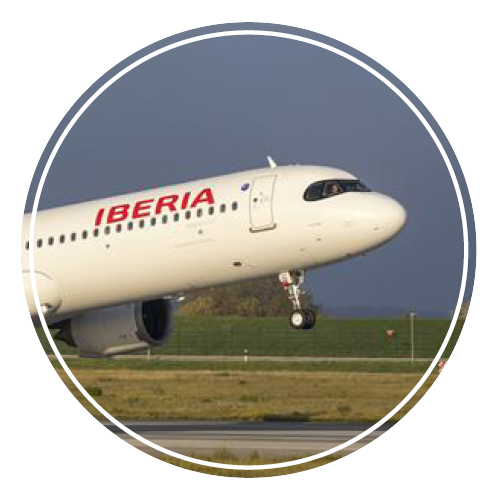
Single-aisle long-haul aircraft
Opening new routes
A new generation of “narrowbody” long-haul aircraft – notably the Airbus A321XLR – is opening more routes from Europe to the Americas and Asia. The latest version of the single-aisle aircraft has a longer range (8,700 kilometres) than the older A321LR. Spanish carrier Iberia, which was the A321XLR’s launch customer, has used the aircraft to operate routes from Madrid to North and South American destinations such as Boston, Washington DC, Orlando, Recife, Fortaleza and Monterrey, with services to Toronto and Newark being added this summer. Iberia, which offers both economy and business class cabins on the A321XLR, says the aircraft enables them to offer “a premium service at the same level as that of our A330 or A350”. Other customers receiving this aircraft include American Airlines, which will deploy it on the soon-to-be-launched New York-Edinburgh route. This game-changing aircraft should help to open up “thinner” long-haul routes around the world in the coming years.

EES & ETIAS
Border controls
Stop us if you’ve heard this one before, but the EU’s much-delayed imposition of a new biometric digital border control system has finally commenced. The Entry‑Exit System (EES) began its phased roll out across the 29 Schengen Area countries in October and is expected to be fully deployed by 10 April. Reports have been mixed about its success, with ACI Europe highlighting “mounting operational issues” at airports, while EU officials have called the introduction “smooth and well-managed”. So far, around one quarter of entry points have installed EES but the real test will come with full implementation this spring and during the busy peak summer period. It will be followed in late 2026 by the European Travel Information and Authorisation System (ETIAS), which will require visa-exempt, non-EU nationals to obtain an online authorisation before arrival in the bloc. The EU has already drawn criticism from business travel groups for increasing the ETIAS fee from €7 to €20. ETIAS will also be introduced in a phased approach from Q4 of 2026 – or at least that is the current plan.

Inflight wifi
Starlink rolls out
One of the most frustrating aspects of business travel over the past decade has been the inconsistency and often ineffectiveness of wifi onboard flights. But airlines seem to think they have finally found the solution through a series of deals with Elon Musk’s satellite-based internet service Starlink. Scarcely a week has gone by recently without another airline group signing up for Starlink – Lufthansa Group earlier this month announced it would be introducing the wifi service across all 850 of its aircraft from later this year. It joins the likes of IAG, Air France, Emirates and SAS in installing Starlink on their flights. One of the earliest adopters has been Qatar Airways, which now has the wifi service available on 120 of its long-haul aircraft. All this sounds great for corporate travellers but will Starlink finally solve a major bugbear when trying to work in the sky?

AI-powered meetings
Intelligent get togethers
If 2025 marked the real adoption of AI agents by corporate travel teams, 2026 is set to see AI applications extend into meetings and event management. New ‘AI native’ event planning tools like Nowadays and BoomPop are gaining recognition, while established players such as Groupize and Cvent are bolting on more AI features to their tech stack. Major tech firms like Google and Microsoft are moving further into meeting workflows with their respective AI solutions (think how Google’s Gemini and Workspace compare to Microsoft’s combined Copilot, Office365 and Teams tools). ServiceNow and Salesforce are also increasing their AI capabilities, which M&E advisor Brad Gillespie argues will see the platforms continue to take market share from event tech incumbents. Salesforce’s ‘native’ event management app Blackthorn is announcing an enhanced platform vision in February.

High-speed rail
Competition on track
Competition is heating up on Europe’s high-speed railways. French rail operator SNCF is set to enter the Italian market this year, with a progressive rollout that aims to cover 15 per cent of the local market. In France, privately-owned high-speed rail operator Velvet (formerly Proxima) is also set to shake up competition when it commences services in 2028. Meanwhile, Trenitalia owner FS Group and US investment firm Certares recently announced plans to launch high-speed services between London and Paris by 2029, in competition with existing operator Eurostar. Richard Branson’s Virgin Group is also on track to commence its own cross-channel rail service as early as 2030, with ambitions to expand into Germany and Switzerland. Not to be outdone, Eurostar has teamed up with Germany’s Deutsche Bahn to jointly develop a direct high-speed rail connection between Germany and London. Even with the row-back on sustainability efforts in some quarters, corporates still want to choose rail as a sustainable travel option. More choice (and more competitive fares) will be a welcome development.

Autonomous rides
Buckle up for a wild ride
Driverless taxis are coming to Europe and your travel policy will need to provide guidance on their use. Google sister company Waymo is already operating “robotaxis” in several US cities and, in October last year, announced plans to bring its “fully autonomous ride-hailing service across the pond” to London in 2026. Waymo is not alone among autonomous vehicle (AV) providers aiming to offer rides on the streets of Europe. Uber plans to trial robotaxis in London this spring in partnership with AI company Wayve and also in Munich with Chinese specialist Momenta. Lyft, meanwhile, is aiming to introduce AVs in Germany and the UK in 2026 following a deal with Chinese tech firm Baidu. To date, Waymo has provided more than 10 million paid rides and, with a Waymo for Business portal that enables admins to manage users, monitor spend and set usage parameters, it has the corporate market squarely in its sights.




ONES TO WATCH
ONES TO WATCH

Trip.Biz
Moving into Europe
The corporate travel division of Chinese travel giant Trip.com showed its hand last year with the opening of an Amsterdam office and the acquisition of UK-based Key Travel – Trip.Biz is eyeing rapid growth in Europe. The company said its acquisition of Key Travel would allow it to “accelerate our market presence in the EMEA region, while enhancing our coverage for clients worldwide”. According to the company, it already works with 15,000 multinational corporations and one million SMEs, predominantly in Asia. In 2024, corporate travel revenue amounted to US$343 million, some 5 per cent of Trip.com’s US$7.3 billion overall revenue. A recently announced antitrust probe in China is unlikely to stymie its overseas ambitions.

Sustainability specialists branch out
Looking at new business lines
Some of the sector’s leading sustainability specialists are now branching out to offer more wide-ranging data and technology services. These include Germany-based eco.mio, which recently launched an AI-powered ‘Recommendation Engine’ designed to improve compliance with corporate travel policy and streamline booking processes. Meanwhile, Clarasight no longer sees itself as merely a carbon planning platform after expanding services into business travel spending, supplier performance and policy compliance, amid plans to “hire aggressively” across Europe and North America to further fuel growth. This diversification strategy makes even more sense now the Trump administration is accelerating the US’s retreat from supporting efforts to tackle climate change. The EU for its part has also pushed back its deadline for EU countries to enact the Corporate Sustainability Reporting Directive (CSRD). Expect to see other players in this market continue the diversification trend in 2026, with sustainability potentially in danger of slipping down the list of top corporate travel priorities, particularly for US-based organisations.

Roamr
Mutual benefits
The pitch from alternative accommodation platform Roamr seems pretty simple with its “paying employees, not hotels” slogan. The platform claims that it can save corporates up to 30 per cent on accommodation costs by incentivising employees to stay with friends or colleagues instead of booking hotels, with both travellers and their hosts getting to keep a share of those savings. Will it catch on or prove to be a bit of a non-starter for corporates? While it’s early days, Roamr has secured around $3 million in funding so far, and says it has gained traction with tech firms looking to cut their accommodation costs. The Ireland-based start-up is also garnering attention in the industry having taken part in the Business Travel Innovation Faceoff at both Business Travel Show Europe in London and the inaugural Business Travel Show America last year. The company plans to expand in the US, as well as offering mobile-first experiences. Expect to hear more about Roamr in 2026.

Travel policy evolution
Dynamic guidance
The prospect of creating more dynamic and effective travel policies has been on the agenda for many years without ever reaching fruition. Policies for many corporates have often languished on little-read PDFs and web pages in far-flung corners of the company intranet. This could be about to change thanks to the AI revolution, according to Adam Kerr, CEO of Tripism, who believes “the era of the traditional travel policy – long, rigid and usually ignored – is fading fast”. He adds that the next generation of travel policies will “use augmented AI to offer subtle prompts, personalised suggestions and built-in guardrails at the point of sale to influence and drive compliant behaviour”. Will AI really be able to successfully embed these more flexible travel policies within existing booking platforms for the ultimate benefit of corporates and their travellers? It’s a tantalising proposition for travel buyers.

Project Sunrise
In it for the long-haul
Ultra-long-haul flights will soon become reality as Australian carrier Qantas gears up to take delivery of its first A350-1000ULR aircraft this October and begin 'Project Sunrise' trials. These aircraft can fly non-stop for up to 22 hours and will connect Sydney with both London and New York, with scheduled services set to begin in the first half of 2027. The direct service will also shave off four hours from the total journey time compared to current one-stop options. The A350s will carry 238 passengers across four classes: first, business, premium economy and economy, with more than 40 per cent of the aircraft dedicated to premium seats. The cabin has been “specially configured for improved comfort” with a “wellbeing zone” located between premium economy and economy that features stretch handles, guided exercise programmes on screens, a hydration station and snacks.



FURTHER INFORMATION
BTN Europe’s 2026 Hotlist was compiled and written by the Business Travel News Europe editorial team. The people, organisations and trends identified on the list were selected from more than 150 nominations lodged by travel industry personnel between 11 November 2025 and 9 January 2026.
SEE ALSO:
BTN Europe's 2025 Hotlist
BTN Europe's 2024 Hotlist
BTN Europe's 2023 Hotlist
BTN Europe's 2022 Hotlist
BTN Europe's 2021 Hotlist